
Quizzicle
Quizzicle, our newest initiative focuses on testing your consulting and analytical skills.
Put your best foot forward and unlock your potential.
We upload new quizzes every Monday!
expert
Guesstimate Cheat Sheet
Useful numbers for guesstimates and market sizing.
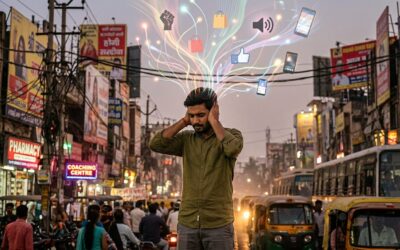
Too Loud to Ignore
India today is louder than ever before. Louder weddings, louder streets, louder politics, louder ambition. But beneath the chaos lies something deeper: a civilisation that entered modernity too fast and never learned restraint along the way.
The article explores how scarcity, rapid economic liberalisation, collective culture, and the desire to finally be seen transformed India into a society that experiences everything at full volume. From overcrowded streets and blaring loudspeakers to the psychology of public life, India’s overstimulation is traced back to something far deeper than noise itself.
Read Kanak’s article to understand why modern India feels so overwhelming and why, after generations of being unheard, the country’s first instinct was never going to be silence.

PayPal
Find out how Nintendo pivoted from Palm Pilots to Digit Wallets.

The Invisible Auction: How Attention Funds a Trillion Dollar Industry
Every time you open a social media app, an invisible financial marketplace springs into action auctioning your attention in milliseconds to advertisers competing for a fragment of your focus. What appears to be a harmless scroll is, in reality, the foundation of a trillion-dollar industry built on monetising human attention.
As AI accelerates content production and digital platforms compete for increasingly limited human focus, the pressure to capture and retain attention intensifies. The result is an economy where users rarely perceive themselves as participants, even as their most finite resource time is continuously extracted and traded.
Dive deeper into Vedika’s article to know more about the marketplace.
ADVANCED
Guesstimate Cheat Sheet
Useful numbers for guesstimates and market sizing.
Too Loud to Ignore
India today is louder than ever before. Louder weddings, louder streets, louder politics, louder ambition. But beneath the chaos lies something deeper: a civilisation that entered modernity too fast and never learned restraint along the way.
The article explores how scarcity, rapid economic liberalisation, collective culture, and the desire to finally be seen transformed India into a society that experiences everything at full volume. From overcrowded streets and blaring loudspeakers to the psychology of public life, India’s overstimulation is traced back to something far deeper than noise itself.
Read Kanak’s article to understand why modern India feels so overwhelming and why, after generations of being unheard, the country’s first instinct was never going to be silence.
PayPal
Find out how Nintendo pivoted from Palm Pilots to Digit Wallets.
The Invisible Auction: How Attention Funds a Trillion Dollar Industry
Every time you open a social media app, an invisible financial marketplace springs into action auctioning your attention in milliseconds to advertisers competing for a fragment of your focus. What appears to be a harmless scroll is, in reality, the foundation of a trillion-dollar industry built on monetising human attention.
As AI accelerates content production and digital platforms compete for increasingly limited human focus, the pressure to capture and retain attention intensifies. The result is an economy where users rarely perceive themselves as participants, even as their most finite resource time is continuously extracted and traded.
Dive deeper into Vedika’s article to know more about the marketplace.
INTERMEDIATE
Guesstimate Cheat Sheet
Useful numbers for guesstimates and market sizing.
Too Loud to Ignore
India today is louder than ever before. Louder weddings, louder streets, louder politics, louder ambition. But beneath the chaos lies something deeper: a civilisation that entered modernity too fast and never learned restraint along the way.
The article explores how scarcity, rapid economic liberalisation, collective culture, and the desire to finally be seen transformed India into a society that experiences everything at full volume. From overcrowded streets and blaring loudspeakers to the psychology of public life, India’s overstimulation is traced back to something far deeper than noise itself.
Read Kanak’s article to understand why modern India feels so overwhelming and why, after generations of being unheard, the country’s first instinct was never going to be silence.
PayPal
Find out how Nintendo pivoted from Palm Pilots to Digit Wallets.
The Invisible Auction: How Attention Funds a Trillion Dollar Industry
Every time you open a social media app, an invisible financial marketplace springs into action auctioning your attention in milliseconds to advertisers competing for a fragment of your focus. What appears to be a harmless scroll is, in reality, the foundation of a trillion-dollar industry built on monetising human attention.
As AI accelerates content production and digital platforms compete for increasingly limited human focus, the pressure to capture and retain attention intensifies. The result is an economy where users rarely perceive themselves as participants, even as their most finite resource time is continuously extracted and traded.
Dive deeper into Vedika’s article to know more about the marketplace.
NOVICE
Guesstimate Cheat Sheet
Useful numbers for guesstimates and market sizing.
Too Loud to Ignore
India today is louder than ever before. Louder weddings, louder streets, louder politics, louder ambition. But beneath the chaos lies something deeper: a civilisation that entered modernity too fast and never learned restraint along the way.
The article explores how scarcity, rapid economic liberalisation, collective culture, and the desire to finally be seen transformed India into a society that experiences everything at full volume. From overcrowded streets and blaring loudspeakers to the psychology of public life, India’s overstimulation is traced back to something far deeper than noise itself.
Read Kanak’s article to understand why modern India feels so overwhelming and why, after generations of being unheard, the country’s first instinct was never going to be silence.
PayPal
Find out how Nintendo pivoted from Palm Pilots to Digit Wallets.
The Invisible Auction: How Attention Funds a Trillion Dollar Industry
Every time you open a social media app, an invisible financial marketplace springs into action auctioning your attention in milliseconds to advertisers competing for a fragment of your focus. What appears to be a harmless scroll is, in reality, the foundation of a trillion-dollar industry built on monetising human attention.
As AI accelerates content production and digital platforms compete for increasingly limited human focus, the pressure to capture and retain attention intensifies. The result is an economy where users rarely perceive themselves as participants, even as their most finite resource time is continuously extracted and traded.
Dive deeper into Vedika’s article to know more about the marketplace.